Get Paid To Promote, Get Paid To Popup, Get Paid Display Banner
Showing posts with label Ford. Show all posts

Wednesday, July 6, 2011

2011 Ford Mad Max Concept

201 Ford Mad Max ConceptHere are some of the latest information on, Mad Max Concept Ford 2011 Ford 2011 ford mad max Mad max mad mad Max Concept 2011 Ford 2011 Ford max concept of Mad Max (2011) 2011 ford concept max mad max mad max mad max mad specs ford 2011 ford.

201 Ford Mad Max ConceptThe new Ford Mad Max Concept specially designed by Ford’s designers for TopGear Magazine Australia to assist celebrate the revival of the Mad Max action movie genre. 2011 Ford Mad Max Concept Exterior style with titanium-lined body shell.

Ford Mustang


The Ford Mustang is an automobile manufactured by the Ford Motor Company. It was initially based on the second generation North American Ford Falcon, a compact car. Introduced early on April 17, 1964, as a "1964½" model, the 1965 Mustang was the automaker's most successful launch since the Model A. The model is Ford's third oldest nameplate in production[citation needed] and has undergone several transformations to its current fifth generation.
The Mustang created the "pony car" class of American automobiles—sports car-like coupes with long hoods and short rear decks—and gave rise to competitors such as GM's Chevrolet Camaro, AMC's Javelin, and Chrysler's revamped Plymouth Barracuda. It also inspired coupés such as the Toyota Celica and Ford Capri, which were exported to the United States.
Production of the 1965 Mustang (VIN coded by Ford and titled as 1965 models) began in Dearborn, Michigan on March 9, 1964 and the car was introduced to the public on April 17, 1964 at the New York World's Fair. It is Ford's third oldest nameplate[citation needed] currently in production next to the F-Series pickup truck line (which has undergone major nameplate changes over the years) and the Falcon that is still in production in Australia.
Executive stylist John Najjar, who was a fan of the World War II P-51 Mustang fighter plane, is credited by Ford to have suggested the name. He was involved in design work on the prototype Ford Mustang I. An alternative view was that Robert J. Eggert, Ford Division market research manager, first suggested the Mustang name. Eggert, a breeder of quarterhorses, received a birthday present from his wife of the book, The Mustangs by J. Frank Dobie in 1960. Later, the book’s title gave him the idea of adding the “Mustang” name for Ford’s new concept car. The designer preferred Cougar or Torino (and an advertising campaign using the Torino name was actually prepared), while Henry Ford II wanted T-bird II. As the person responsible for Ford’s research on potential names, Eggert added “Mustang” to the list to be tested by focus groups; “Mustang,” by a wide margin, came out on top under the heading: “Suitability as Name for the Special Car.” The name could not be used in Germany, however, because it was owned by Krupp, which had manufactured trucks between 1951 and 1964 with the name Mustang. Ford refused to buy the name for about US$10,000 from Krupp at the time. Kreidler, a manufacturer of mopeds, also used the name, so Mustang was sold in Germany as the "T-5" until December 1978.
The 1965 and 1966 Mustangs are differentiated by variations in the exterior, despite similar design. These variations include the emblem on the quarter-panels behind the doors. In 1965 the emblem was a single vertical piece of chrome, while in 1966 the emblem was smaller in height and had three horizontal bars extending from the design, resembling an "E". The front intake grilles and ornaments were also different. The 1965 front grille used a "honeycomb" pattern, while the 1966 version was a "slotted" style. While both model years used the "Horse and Corral" emblem on the grille, the 1965 had four bars extending from each side of the corral, while on the 1966, these bars were removed. 1966 saw introduction of 'High Country Special' limited edition, 333 of them were sold in Colorado, Wyoming, and Nebraska.
As Lee Iacocca's assistant general manager and chief engineer, Donald N. Frey was the head engineer for the T-5 project—supervising the overall development of the car in a record 18 months—while Iacocca himself championed the project as Ford Division general manager. The T-5 prototype was a two-seat, mid-mounted engine roadster. This vehicle employed a Taunus (Ford Germany) V4 engine and was very similar in appearance to the much later Pontiac Fiero.
It was claimed that the decision to abandon the two-seat design was in part due to the low sales experienced with the 2-seat 1955 Thunderbird. To broaden market appeal it was later remodeled as a four-seat car (with full space for the front bucket seats, as originally planned, and a rear bench seat with significantly less space than was common at the time). A "Fastback 2+2" model traded the conventional trunk space for increased interior volume as well as giving exterior lines similar to those of the second series of the Corvette Sting Ray and European sports cars such as the Jaguar E-Type.The "Fastback 2+2" was not available as a 1964½ model, but was first manufactured on August 17, 1964.
The new design was styled under the direction of Project Design Chief Joe Oros and his team of L. David Ash, Gale Halderman, and John Foster—in Ford's Lincoln–Mercury Division design studios, which produced the winning design in an intramural design contest instigated by Iacocca.
Favorable publicity articles appeared in 2,600 newspapers the next morning, the day the car was "officially" revealed. A Mustang also appeared in the James Bond film Goldfinger in September 1964, the first time the car was used in a movie.
To cut down the development cost and achieve a suggested retail price of US$2,368, the Mustang was based heavily on familiar yet simple components, many of which were already in production for other Ford models. Many (if not most) of the interior, chassis, suspension, and drivetrain components were derived from those used on Ford's Falcon and Fairlane. This use of common components also shortened the learning curve for assembly and repair workers, while at the same time allowing dealers to pick up the Mustang without also having to spend massive amounts of money on spare parts inventories to support the new car line.

Tuesday, June 28, 2011

Ford Fusion

Ford Fusion is a name used on two different models of cars from the Ford Motor Company.
- Ford Fusion (Europe)
- Ford Fusion (Americas) / Ford Fusion Hybrid

Impressive Silver Ford Fusion

Elegant Ford Fusion

2011 Engines

- 2.5 L Duratec 25 I4 175 hp (130 kW), 172 lb·ft (233 N·m). torque;[31] 23 mpg city/33 mpg highway/26 mpg combined (automatic); 22/30/25 (selectshift, SE/SEL trims); 22/32/25 (manual, S trim); 22/29/24 (manual, SE trim)
- 3.0 L Duratec 30 V6 240 hp (179 kW), 223 lb·ft (302 N·m). torque; 20/28/23 FWD; 18/26/20 AWD, gasoline/E85 flex fuel
- 3.5 L Duratec 35 V6 263 hp (196 kW), 249 lb·ft (338 N·m). torque (Fusion Sport); 18/27/21 FWD; 17/24/19 AWD
2.5 L Duratec 25 I4 156 hp (116 kW), 136 lb·ft (184 N·m). torque for hybrids; 41/36/39


2011 Ford Fusion SEL

Strong Ford Fusion Model

The Ford Fusion (code name CD338) is a mid-size car produced by the Ford Motor Company since the 2006 model year. The 2010 model was awarded the Motor Trend Car of the Year and its hybrid version won the 2010 North American Car of the Year Award. The Fusion is manufactured at Ford's Hermosillo Stamping & Assembly plant in Hermosillo, Sonora, Mexico, where the similar and now discontinued Mercury Milan and the Lincoln MKZ are also built. All three cars utilize the CD3 platform, which is, in fact, Mazda's current GG chassis as used for the Mazda6 (M/Y 2003–2008). Ford has used every evolution of the Mazda G platform since 1983.

Ford Fusion Interior

Ford Fusion Seats View

The European Ford Fusion is a stretched version of the Ford Fiesta supermini produced by Ford of Europe since 2002 and sold in Europe and India. The design includes elements of both estates and multi-purpose vehicles. Its extra height compared with the Fiesta is due to both roof racks, increased ground clearance and taller roof, which makes it roomier and more comfortable for taller drivers than regular superminis, drawing it closer to mini MPVs and mini SUVs.

Thursday, June 23, 2011

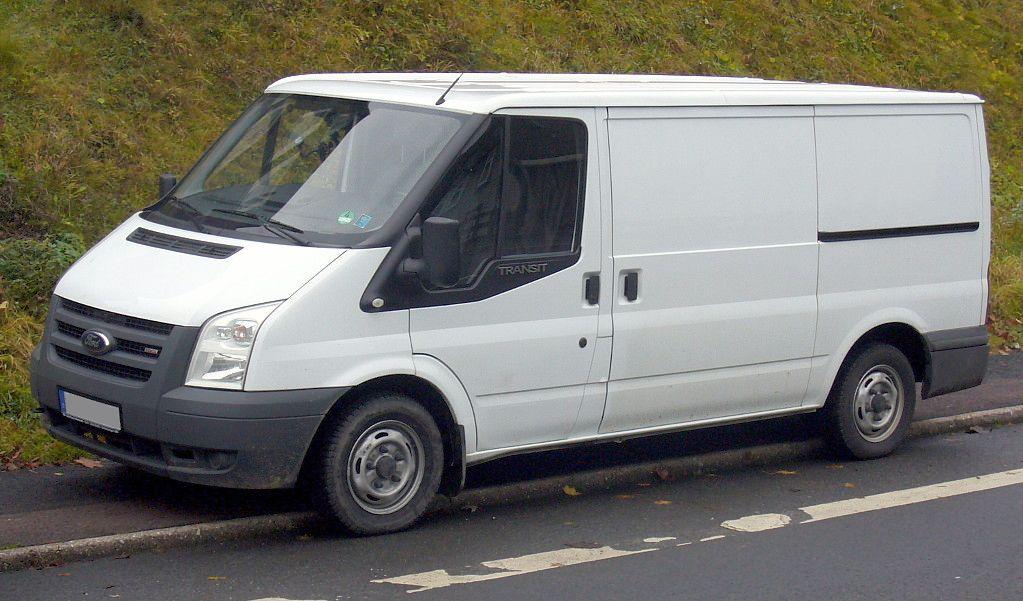
Ford Transit

The Ford Transit is a range of panel vans, minibuses, and pickup trucks, produced by the Ford Motor Company in Europe. The Transit has been the best-selling light commercial vehicle in Europe for 40 years, and in some countries the term "Transit" has passed into common usage as a generic term applying to any light commercial van in the Transit's size bracket. Although the Transit name has been in use by Ford since 1953, the first definitive Transit platform was launched in 1965. Since then, six million Transits have been produced across three basic platforms (first debuting in 1965, 1986 and 2001, resepctively), with several "facelift" versions of each. The six millionth van was built in March 2010. Unlike the British-built Transit "family", the first production Ford to wear the "Transit" badge was a van built in Ford's Köln (Cologne) plant in Germany. It was introduced in 1953 as FK 1000 (Ford Köln carrying 1,000 kg). From 1961, this vehicle was called the Ford Taunus Transit. Production of this model ceased in 1965.The German vehicle was not widely exported, and the "Mark 1" tag has commonly been applied, retrospectively, to the 1965 to 1978 British model (see below). Whilst there have been three basic Transit platforms since 1965, the various facelifts and upgrades over the years have been referred to using a conflicting range of "Mark" numbers, with some sources counting a facelift as a new "Mark", some not. Ford's own historical look back at Transit production, published for the launch of the 1994 model, avoids the issue by referring to generations of Transit by years produced. This article attempts to make mention of all the common naming systems.


2010 Ford Transit Connect Video Review - Kelley Blue Book

The first Ford Transit proper was introduced in October 1965, and has been in continuous production in three basic generations to the present day. The van was produced initially at Ford's Langley facility in Berkshire, England (a former Second World War aircraft factory which had produced Hawker Hurricane fighters), but demand outstripped the capability of the plant, and production was moved to Southampton, where it has remained. Transits have also been produced in Ford's Genk factory in Belgium and also Turkey. Transits have been produced in Amsterdam for the local market from the mid seventies until the end of 1981. This factory had ample capacity, since the Ford Transcontinental produced there had little success (total production 8000 in 6 years). Although the Transit sold well in the Netherlands, it was not enough to save the factory, which closed in December 1981. The Transit is also produced in China for the Chinese market.The second generation Transit platform appeared in January 1986 and was notable for its all-new bodyshell which was of "one-box" design (i.e. the windscreen and bonnet are at the same angle), and the front suspension was changed to a fully independent configuration on SWB versions. The engine range was carried over largely unchanged from the last of the 1978-85 generation models, although in 1989 the high performance 3.0 V6 petrol was replaced by the Cologne 2.9 EFI V6. A subtle facelift in 1992 saw the fully independent front suspension adopted across the range, whilst a redesigned floorpan allowed the use of single, rather than paired, rear wheels on the LWB derivative, further increasing payload—these models are identifiable by the slightly more rounded front headlamps.The next Transit, introduced in July 2000, was the third all-new design, and borrowed styling cues from Ford's "New Edge" designs like the Focus, and Ka. Developed by Ford in the United States, the main innovation is that it is available in either front or rear-wheel drive. Ford nomenclature makes this the V184 (rear wheel drive) or V185 (front wheel drive) model. This model features the "Puma"-type Duratorq turbo diesel engine also used in the 2000 Mondeo and Jaguar X-Type, with the petrol versions moving up to the 2.3 L 16-Valve edition of the straight-4 engine. With this engine, the Transit can reach 60 mph (97 km/h) in 21 seconds and reach a top speed of 93 miles per hour (150 km/h), returning it to car-like performance as claimed for the earliest models. A demonstration of this model's speed was shown on Top Gear in 2005, where German race driver Sabine Schmitz attempted to drive it around the Nürburgring in under ten minutes, matching Jeremy Clarkson's time in a turbodiesel Jaguar S-type; she was unsuccessful, but only by a few seconds.

The Ford Transit VJX6541DK-M is the Chinese version and it based on its predecessors of the fourth and fifth generation. This generation is only built in Nanchang by Jiangling Motors and is reserved for the Chinese domestic market. Remarkable are the much larger headlights and the larger grille. The model was launched to the market in 2006. Overall, the generation have 70 improvements to its predecessor. The interior has been changed and made more ergonomic. Power windows are standard, but ABS is optional. The Chinese Transit is available with two diesel engines and one petrol. One of them has a power of 67.6 kW (Type JX493ZQ3), the other 68 kW (JX493ZQ4). Both diesels have a capacity of 2771 cc. The Petrol version uses a Barra 190 inline-6 motor. The top speed is specified at 68.35 mph (110 km/h). The Chinese Transits have a VIN in following form: LJXBMCH1××T××××××. A number of promotional Supervans were built, combining the outline and appearance of the Transit with the chassis and performance of a sports racing car. A Mark 6 Ford Transit was used in a segment on BBC's Top Gear TV show. The show was broadcast on 10 July 2005. In the segment, Sabine Schmitz drove the Transit around the Nurburgring to see if she could beat presenter Jeremy Clarkson's time in a Jaguar S-Type Diesel of 9 minutes 59 seconds. However, her best time was 10 minutes 8 seconds despite reducing the weight of the van. A modified Mark 3 Transit was also used in Top Gear Australia's Ashes Special and Top Gear series 16 episode 2, where Richard Hammond (UK) raced the van against a Holden VE Ute driven by Shane Jacobson (Australia) in a drag race. Unknown to Hammond and the Australians, the van was powered by a turbocharged Jaguar XJ220 engine, in addition to running on wheels from the same model.

Saturday, June 18, 2011

Ford Fiesta 2011

With energetic performance, premium quality, impressive value and 15 class-exclusive technologies, the five-door 2011 Ford Fiesta hatchback is one of the most exciting entrants to the small car scene in years.


Ford Fiesta Performance

In SE and SES trims, the 2011 Fiesta Hatch (starting MSRP $15,120), hits dealerships with a strikingly sporty design, spirited performance specs and a carefully crafted, high-quality interior that many of its competitors seem to be lacking. The all-new Fiesta comes in three four-door sedan versions, in addition to the flexible and athletic five-door hatchback trims.
The Fiesta Hatch’s body style strikes a particularly pleasing balance between rowdy and refined. Its three-bar, body-colored grille and dragon’s-eye headlamps, optional premium wheels, decklid spoiler and bold color choices grab attention and immediately separate the Fiesta from a sea of compact competitors, but it’s the Hatch’s subtle exterior enhancements that make it so appealing. A low front end, upswept tail, wide stance and razor-slash side character line give the Fiesta an athletic presence while available chrome moldings and LED parking lamps add a hint of sophistication.
Under the hood, both trims sport Ford’s advanced 1.6-liter Duratec® inline four-cylinder engine with Twin independent Variable Camshaft Timing (Ti-VCT), which makes 120 hp and 112 lb/ft of torque (more than competing models from Honda and Toyota) through a standard five-speed manual or optional, North American industry-exclusive six-speed PowerShift automatic transmission. In addition to smooth, precise gear transitions, the quick-shifting twin-clutch six-speed also helps deliver what’s expected to be best-in-class fuel economy of 40 highway mpg (on SE trims equipped with an available Super Fuel Economy Package, which offers enhanced aerodynamics through the use of items like underbody shields).
One of the Fiesta’s most impressive features is its remarkably stiff and painstakingly tuned chassis, which complements the Hatch’s balanced stance and corner-mounted wheels with fun, nimble handling. Adopting a dynamic MacPherson strut front suspension (with sway bar) and twist beam rear suspension setup, the Ford implements standard Electric Power Assist Steering (EPAS) with what’s known as active nibble control, a software-based addition designed to help lessen road vibration and provide a smoother, more confident ride. EPAS’ Pull-Drift Compensation helps the Fiesta combat uneven roads and crosswinds; both nibble control and Pull-Drift Compensation are class-exclusives. The performance-savvy Fiesta comes standard with Ford’s AdvanceTrac® electronic stability control (ESC), which helps limit wheel slip and skidding around tight corners, and offers available class-exclusive Hill Start Assist feature as well. Ford’s Easy Fuel™ capless fuel-filler system is yet another North American industry-exclusive feature, and it’s standard on the 2011 Fiesta.
Inside, the 2011 Fiesta’s surprisingly spacious cabin is refined, carefully crafted with premium materials and specially designed to mitigate harsh engine and road noise (you can thank the double-layered door seals, laminated windshield, foam-filled beams and aerodynamically designed exterior features for that). There is a noticeable sense of quality within the compact’s nicely-appointed and thoughtful interior with soft-touch materials, available, class-exclusive, leather-trimmed heated front seats, attractive ambient lighting and a modern, metallic-trimmed cockpit design (cleanly and succinctly modeled after a cell phone). In addition to innovative storage options throughout the cabin (for everything from beverages and cell phones to concert tickets and MP3 players), the Fiesta’s folding rear seats unlock 26 cubic feet of versatile cargo space.
There’s no shortage of innovation options within the Fiesta either. Atop the center stack, you’ll find Ford’s class-exclusive LCD message center with easy-to-see and control audio, phone and data readouts. An available 80-watt audio system (standard on the SES) integrates SIRIUS Satellite Radio, as well as Ford’s optional SYNC® system, an intuitive, voice-activated communication and information system that allows for everything from hands-free phone calls and audio system control to real-time traffic, weather and news. For enhanced safety, SYNC also provides audible text messages, vehicle health reports and 911 Assist™, should airbags deploy.
In fact, the only thing Ford’s flexible Fiesta is inflexible on is its approach to safety. The Fiesta employs a remarkably rigid and unyielding safety cage made from high-strength boron steel, and backs its space-age frame with a Safety Canopy® System that includes seven standard airbags (more than any other vehicle in its class). Blind Spot Mirrors, integrated unobtrusively into the corners of the Fiesta’s rearview mirrors, enhance visibility, and the hatch also comes standard with a tire-pressure monitor, three-point safety belts and reinforced side door beams.

Saturday, June 11, 2011

Ford f 150

Ford f 150
The F-150 is undoubtedly the most popular among the F-Series – a series of pick-up trucks from the stables of Ford Motor Company. The F-150 happens to be the best-selling truck in the United States of America for over three decades. The F-series alone made up half of the profits of the Ford Motor Company in recent years. The F-150 was launched in 1975 – it was also called the heavy half ton by people. The eleventh generation of the F-series encompasses the 2006 model of the Ford F-150. The F-150 had been redesigned in 2004 with the new P2 platform.The 2006 model of the F-150 has a 4.6 litre Triton V8 engine – some of the newer trucks also have 3-valve, 5.4 litre 3V Triton V8 engines. The 2006 F-150 comes equipped with a four speed automatic transmission, along with a five speed manual transmission and the truck produces a whopping 300 HP. The pick-up is available both as a two door and a four door truck, and its side windows have an appearance similar to that of the Ford Super-Duty – the "Y" dip towards the front of the door. The F-150 also has a large closed loop design in its front tow hook, and can pull over 14,000 kg with just one hook.The F-150 is head and shoulders above its competitors, winning accolades including the Car and Driver magazine’s ‘Best Pick-up Truck’ award two years in a row. The 2006 model of the F-150 was also chosen as the ‘Fleet Truck of the Year’ by Business Fleet magazine as well as Automotive Fleet.Even though you’re always on the lookout for cheap deals, there is no substitute for class – and the Ford F-150 simply oozes class. Buy one today. Bid for the cheapest deals for your very own F-150 at auctions on the internet.
                                            Ford f 150
                                           Ford f 150
                                             Ford f 150

                                            Ford f 150
                                           Ford f 150
                                            Ford f 150
                                            Ford f 150

Friday, June 10, 2011

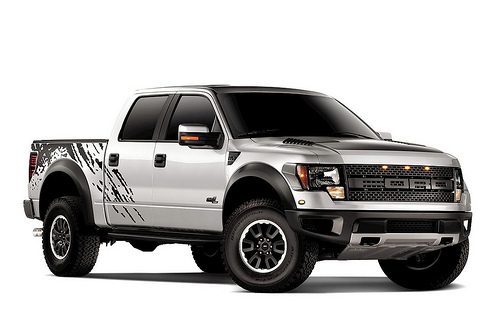
Ford Raptor Blacked Out

Based upon the hugely popular F-150 range, the new SVT Raptor version features a significantly reworked suspension set-up to ensure a perfect blend of on-road dynamics and high-speed sand-racing ability.

A key difference between the Raptor and ‘stock’ F-150s - beyond the oversized grille and orange hue – is its aggressive stance, especially considering it’s 177mm wider.

Interior design is outlandish yet borders on right side of tasteful. The steering wheel is wrapped in black leather and features a molten-orange leather strip that serves as a centring sight line.

Active Ford Raptor Blacked Out


Impressive Ford Raptor Blacked Out

Ford Raptor Blacked Out Show Up

Boosting traction are a radical set of BF Goodrich All-Terrain TA/KO 315/70 tyres running on 17-inch mags, bolstered by a rear differential lock which can be engaged on the move. The range of stability systems are tailored to an off-road bias, ensuring optimal stability during dune jumping manoeuvres; ABS though, stays engaged at all times, enabling the hill descent control to function. Powering the heavily styled Raptor on display at SEMA is a 235kW 5.4l Triton V8 which also brings 529Nm to the game. The range is expected to be bolstered by a 300kW 6.2l V8 by the end of 2009, though the large capacity V8 engine – codenamed Boss by Ford insiders – had the skids put on its development cycle at the height of the oil price spike midway through 2008.

Ford Raptor Blacked Out With GPS

"With the F-150 SVT Raptor, we changed the axle, the whole front suspension is different – new upper A arm, new lower A arm, new tie rod, new half-shaft joints,” said Jamal Hameedi, Ford SVT chief engineer. “It’s well beyond what SVT has ever done with one of our vehicles.” In addition to a beefed up suspension, the F-150 SVT Raptor also boasts unique internal bypass Fox Racing Shox, the only internal bypass shocks on a street truck. It endows the Raptor with 292mm worth of wheel travel op front and 330m at the rear. A position sensitive dampening internal bypass feature allows the shock to become significantly stiffer as it travels, preventing the truck from bottoming out.

Ford Raptor Blacked Out Seats View

Cool Ford Raptor Blacked Out In Black Color

Strong Ford Raptor Blacked Out

Gulf Slot It Ford GT40 MKI


CW09 Ford Gt 40 MKI: Le Mans Winner 1969
Drivers: Jacky Ickx, Jackie Oliver


The Ford GT40 was one of the most successful car who won four times the 24 hours of Le Mans in 1966 being the Mk II, 1967 the Mk IV, and 1968-1969 the oldest chassis design, the Mk I.

This is the first car in Le Mans history to win the race more than once with the same chassis; it was built to compete against Ferrari (who had won at Le Mans six times in a row from 1960 to 1965).

The Mk I chassis n. 1075 was a steel and aluminum semi-monocoque; body was reinforced with carbon fiber. It had brakes ventilated discs. The engine, originally a 4.7 liter, had been enlarged to 4.9-liter with the special alloy Gurney-Weslake cylinder head; the gearbox was a ZF 5 gears.

The MKI was later upgraded to Mk II specifications with a 7.0 liter (427ci) engine.
The GT 40 will become the most glorious of all Ford Racing; in '69 the car caught the victory at Sebring.

Saturday, May 28, 2011

2012 Ford Mustang Boss 302 Laguna car wallpapers gallery

car wallpaper 2011,car modif
2012 Ford Mustang Boss 302 Laguna car wallpapers gallery
car wallpaper 2011,car modif
2012 Ford Mustang Boss 302 Laguna car wallpapers gallery

Wednesday, May 25, 2011

Ford

Ford
                                           Ford
                                           Ford
                                           Ford
                                           Ford
                                            Ford
                                           Ford
                                           Ford
                                           Ford
                                           Ford