
The 2010 'Stang is at once the same and different. Like the 2005-09 model, it's immediately recognizable as Ford famous pony car. If anything, it looks even more like a late '60s Mustang thanks to some additional curvature in its lines, especially along the belt-line. At the same time, it also looks more contemporary. The designers have improved the aerodynamics and reworked many of the design details. What may be even more important for drivers of the Mustang is an all-new interior that finally dispenses with cheap, hard plastics and looks like it was designed in this century, but more on that in a bit.

Starting at the front, the basic theme of the current 'Stang is retained with the forward-canted grille and inset headlamps. The turn signals have been moved into the pocket with the headlamps, which themselves appear smaller than before. The whole hood has been re-contoured with a "power-dome" in the center, which should provide plenty of clearance for performance hardware when tuners and owners begin modding their cars. Out toward the edges, the fender and hood are slightly concave leaving a ridge that runs back to the A-pillar. The whole leading edge of the hood now curves down smoothly to ease the airflow around the nose and over the top of the car. The old school antenna mast has finally been banished from the front fender and the windshield washer nozzles now sit under the trailing edge of the hood instead of on top.


At the outer ends of the lower front fascia are black plastic air deflectors to further enhance the airflow, directing it around the sides instead of underneath the car. All of this contributes to drag reductions of seven percent on the V8-powered GT model and four percent on the base V6. Better management of the air-flow around the front of the car also reduces lift by 23 percent.
Around the sides, the transition from the fenders to the wheel arches has been smoothed out, which eliminates the crease on the current cars. The longitudinal crease that starts at the trailing edge of the front wheels has been sharpened and now has a slight under-cut that makes it more prominent, while the "hockey stick" side scoop contour has been subtly re-shaped. The lower edge of each side window has been moved down and now intersects with the newly curved contour of the rear fender at the trailing edge of the door.

Exterior designer George Saridakis describes the rear haunches and other changes as giving the Mustang a more voluptuous look. At the very back, the outer ends of the rear fascia are now angled forward, which helps to reduce the visual impression of the rear overhang. Also contributing to that revised impression is a rear bumper with a reduced offset.


Around the back of the car, Ford designers have taken advantage of the illusion that results from using contrasting colors. The lower part of the rear fascia is now a contrasting black with a molded-in diffuser. The darker color reduces the visual height of the rear deck. The tail-lamps, which still feature the traditional three bar look, have been re-shaped and now feature sequential turn signals. When the turn signals are on, the three lamps light in sequence from the innermost to the outer. The rear badge has also been reshaped and the keyhole has been removed as the Mustang finally gets an interior trunk release.

When the 2005 Mustang debuted, one of the biggest and most justified criticisms was its interior, specifically the cheap materials and hard plastics. Those criticisms are completely banished in the 2010 Mustang. All the plastic surfaces on the dash are now soft to the touch and pleasant to look at. Even the trim across the dashboard is aluminum rather than metallic-finished plastic. The same goes for the spokes on the steering wheel. The dual-brow look across the top of the dashboard that dates back to the early Mustangs is now also reflected across the lower edge.


The center console of the current model has elements at a variety of heights and many drivers complain about hitting their knees on the parking brake lever when bracing themselves during cornering. The brake lever on the '10 Mustang has been shortened and moved back, well clear of driver's right knees. The arm rest is now flush mounted and there is a retractable cover over the cup holders. The entire surface of the center stack and console now mirrors the arm-rests on the door panels with everything at the same height and matching contours.
The designers have also taken elements that previously stuck up above the dash surface like the A/C registers and gauges and made them flush or even set them below the surface. The sub-flush gauge mounting reduces the impression of looking down a tunnel at the instruments. The back-lit gauges also now have a translucent arc where the numbers are. The numbers normally appear in black against a white background unless you go for the MyColor option. In that case, the background will appear in whatever color the driver chooses. MyColor also brings a back-lit "Mustang" kick plate that is kind of gimmicky but looks cool when you open the door.

The designers have also added a couple of nice detail touches. The standard icon that normally appears on traction control disable switches has been reworked to look like a Mustang including the tri-bar taillights. The basic shape of the steering wheel is carried over but the spokes have been chamfered allowing for a more comfortable grip. The overall impression of the Mustang's new interior is that Ford has improved its execution in making the cockpit both look more appealing and feel better to the touch.
When Ford redesigned the Escape CUV for 2008, the body and interior were also completely redone but the mechanical components were largely carried over. Similarly, the drivetrains and suspension components of the 2010 Mustang are mostly carried over, although some improvements have been made on the V8 GT model. According to chief engineer Paul Randle, the current Bullitt has been considered the best Mustang ever in many respects thanks to its wonderful balance of handling and power, so it was chosen as the baseline for the new GT.

The 2010 GT retains its 4.6L three-valve V8, which has now been bumped up to 315 hp and 325 lb-ft of torque. The air intake has been reworked so that fresh air is drawn from behind the grille rather than from the wheel well. The duct from the air filter box to the throttle body has been straightened and smoothed out to reduce flow restriction. The whole car has also been stiffened and new sound insulation has been added for a quieter driving experience.
Since Mustang drivers still like to hear the roar of a big V8, the engineers have compensated. A small tube coming off the side of the duct runs to the passenger compartment giving occupants some of that V8 induction sound directly. GT models with the new 19-inch wheel-and-tire package also get an aluminum strut tower brace to stiffen the car's structure further. The base 4.0L V6 remains unchanged for 2010, although 2011 or soon after will probably see the Mustang follow the Escape's path with more significant powertrain upgrades. That's when we're likely to see Ford's smaller displacement, turbocharged, direct-inject EcoBoost engines added to the pony.


The Mustang's suspension architecture has also been carried over from the S197, meaning struts with lower control arms up front and a live axle trailing links and a panhard rod out back. The engineers have re-tuned the springs and added new dampers that should improve wheel control and ride. New wheel-and-tire packages are now available across the board with a one-inch increase in diameter. The V6 Mustangs now have 17-inch wheels standard with optional 18-inchers, while the GT has 18-inch or 19-inch packages.

One feature that is new to the 2010 Mustangs is electronic stability control which will be standard on all models. The ESC always defaults to on when you start the car. On the V6 Mustangs the driver will have the option to turn the system off. On the GT, the system can be turned off, or switched to a performance mode that allows more slip before intervening to limit the fun.
One important thing that hasn't changed much is weight. The 2010 V6 Mustang only picks up 15 lbs compared to the 2009 model, while the GT climbs just 35 lbs. That means Mustangs still have an advantage of about 400-500 lbs over the new Camaro and even more compared to the larger Challenger.

We'll be allowed behind the wheel of the new 2010 Ford Mustang in mid-December, at which time we'll let you know how it behaves compared to its predecessor. From what we've seen already, the new interior is far beyond both its new competitors and its predecessor in the areas of design, ergonomics and materials. Assuming Ford doesn't significantly increase the price, the Mustang should continue to offer the affordable performance it always has with a new measure of refinement.

 The boss is back – and it’s back with a vengeance. Meet the 2012 Ford Mustang Boss 302 – said to be the quickest, best-handling straight-production Mustang ever offered by Ford, based on the strong foundation provided by the 2011 Mustang GT. The model has been upgraded in nearly every aspect including engine output, brakes, suspension, interior and exterior all examined to optimize weight, aerodynamics and track performance.
 The decision to build a modern Boss was not entered into lightly,” said Derrick Kuzak, group vice president, Global Product Development. “The entire team at Ford felt the time was right and with the right ingredients, the world-class 2011 Mustang could support a successful, race-bred, worthy successor to the original Boss 302. For us that meant a production Mustang that could top one of the world”s best ““ the 2010 BMW M3 ““ in lap times at Laguna Seca. We met our expectations.”
 To celebrate the victory and the racing heritage, Ford will offer a limited number of Boss 302 Laguna Seca models for those interested in more on-track driving. The 302 Laguna Seca has increased body stiffness, a firmer chassis set-up and an aerodynamics package carried over almost in its entirety from the Ford Racing Boss 302R.
 So what’s under the hood? The 2012 Ford Mustang Boss 302 uses the same 5.0L V8 from the 2011 GT but to achieve the high-rpm horsepower to make it competitive on the track, Ford added a new intake, revised camshafts and a more aggressive control calibration. All that results in 440-hp and 380 lb-ft of torque. Power is transmitted to the wheels through a race inspired short-throw, close-ratio six-speed manual transmission handles gear change duties.


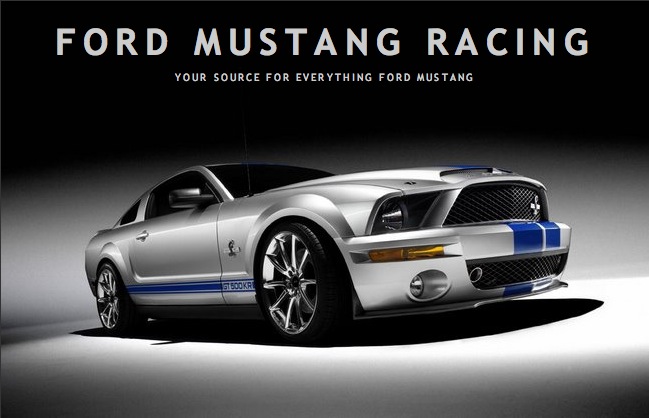


 Ford Mustang
 Ford Mustang
 Ford Mustang


